How to Cope With Anxiety: What Helps an Adult in Practice

"I tried breathing practices and apps, nothing helps, so something is wrong with me." Many who looked for how to cope with anxiety and gave up after a few attempts draw this conclusion. If you searched for "how to cope with anxiety," it helps to start with a simple fact: single techniques rarely work on their own, and the treatment of anxiety is built in steps, from the simple to the more intensive.
Below is what is known about such steps and what you can do in practice. The article helps you get your bearings and does not replace a specialist's consultation.
How to Cope With Anxiety, Step by Step
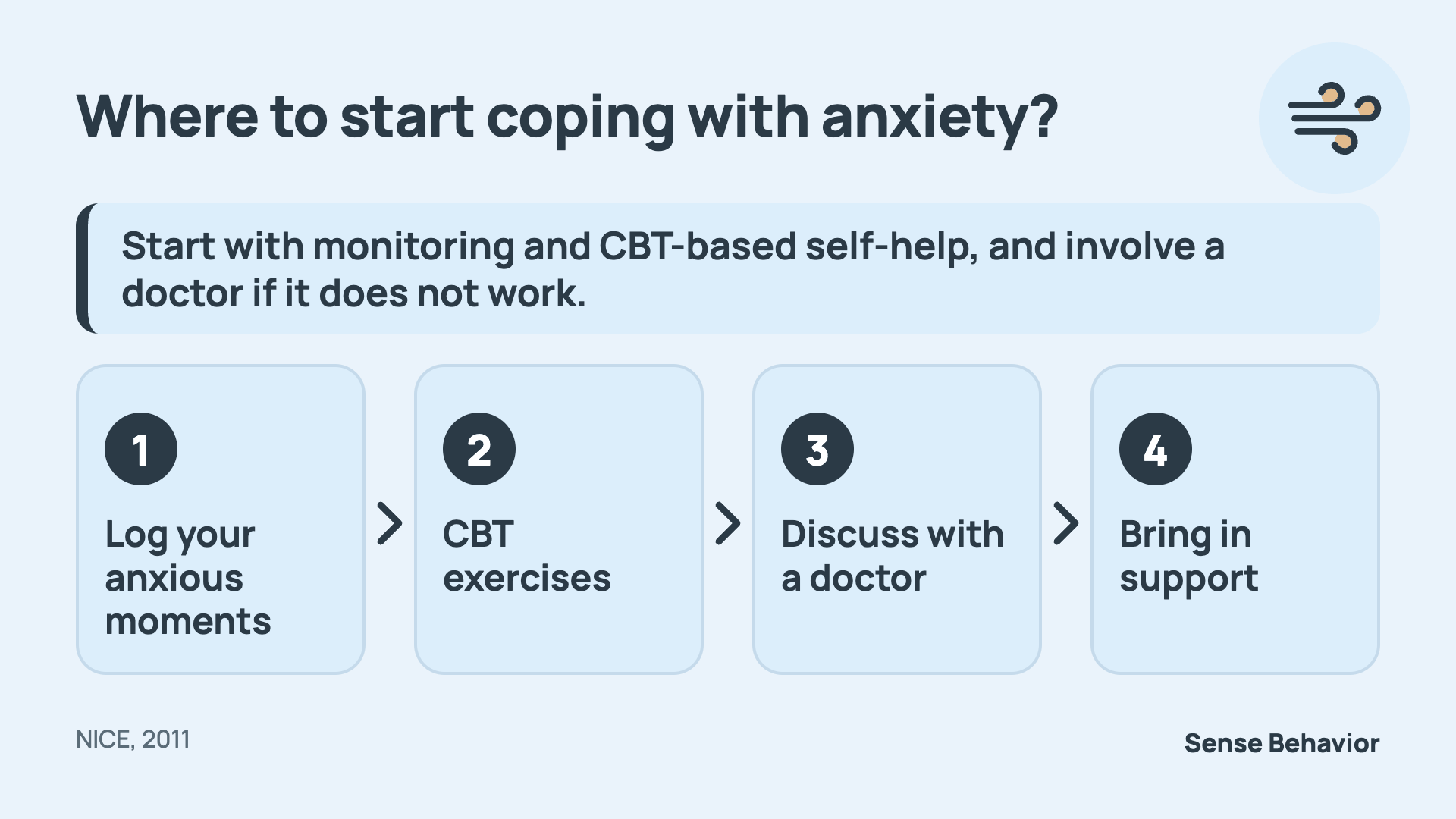
The UK's NICE guideline for generalized anxiety disorder suggests going from the least intrusive and most effective help to more intensive help (NICE, 2011). These are the steps:
- Step one. Identification, an explanation of what anxiety is and what the options for help are and active monitoring of symptoms.
- Step two. If it has not got easier, help of low intensity is offered: self-help with independent materials, guided self-help, or psychoeducational groups. A self-help program is built on the principles of cognitive behavioral therapy (CBT), involves systematic work over at least six weeks, and minimal contact with a specialist.
- Step three. With marked impairment of life or an inadequate response, either individual CBT or applied relaxation, or drug treatment is offered, and the choice depends on your preference, as there is no evidence that one mode is superior (NICE, 2011).
What Research Shows About CBT for Anxiety
CBT is moderately effective. A meta-analysis by Carpenter and colleagues, pooling 41 placebo-controlled studies and 2843 participants, showed a moderate effect on the symptoms of the disorder (g = 0.56) and a small to moderate one on other anxiety symptoms (g = 0.38). The effect was large for generalized anxiety disorder and obsessive-compulsive disorder and small to moderate for social anxiety, panic, and post-traumatic stress disorder (Carpenter et al., 2018). This means CBT does not help everyone and not always at the first attempt, and the right format is chosen.
What You Can Do Yourself When You Feel Anxious
Build small supports that work alongside treatment and do not replace it on their own. You can start today:
- write down when anxiety rises and what comes before it, this is the same active monitoring that help starts with;
- pick one self-help program based on CBT principles and work with it systematically for at least six weeks and not drop it after a few attempts;
- if you can, reduce the load during an anxious period and protect your sleep;
- tell someone close about your state, someone you can lean on.
If the anxiety flares up mainly around other people and in situations where you feel judged, read separately about social anxiety.
What to Do If Nothing Helps
Tell the doctor about it and ask them to assess the causes of the anxiety more broadly than just as an anxiety disorder. Anxiety often goes together with other conditions, and if they are left unattended, help with one item gives no result. We cover this in more detail in the pieces on ADHD and anxiety and autism and anxiety in adults, and the general picture is described in the piece on anxiety in adults.
If none of this helps, the conversation with a doctor may include medication, and how that works is described in anxiety pills.
If it is easier to work things out together with someone, you can start with no commitment through the bot, which asks a few questions and suggests a next step, and how the center's work with adults is set up in general is on the For Adults page.
Sources
This material is for informational purposes only and does not replace a consultation with a specialist.