Anxiety Pills: Who Prescribes Them and Why You Shouldn't Pick Them Yourself

If you searched for "anxiety pills," you probably want relief quickly and are looking for what people take for it. This article names no drugs and gives no doses or rankings, because the choice of medication is made only by a doctor. It does explain how the decision is made, why choosing yourself is risky, and what you can do before the visit.
The information is based on clinical guidelines and helps you prepare for a conversation with a doctor. It does not replace a specialist's consultation.
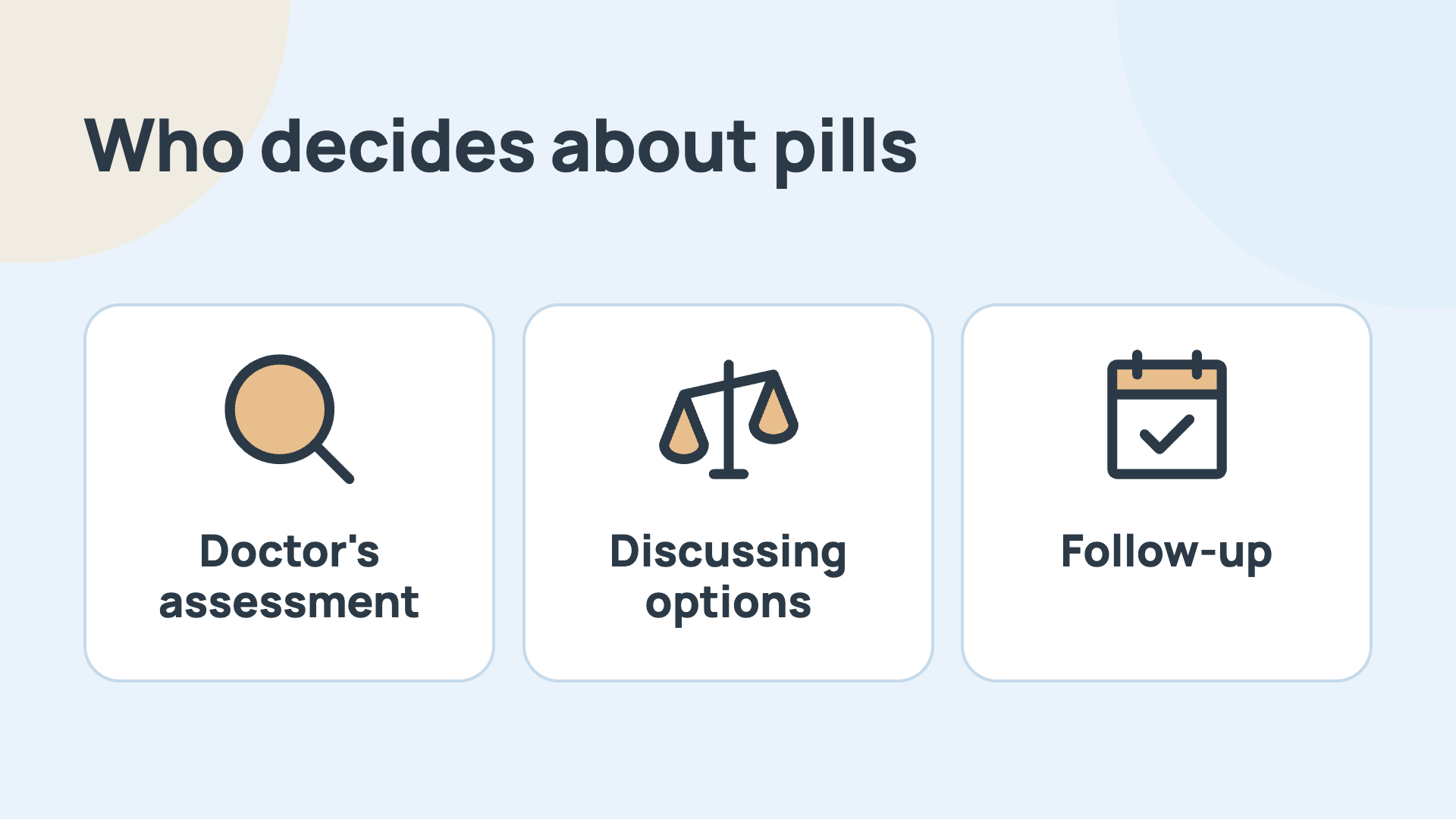
Who Prescribes Anxiety Pills and How
Medication is prescribed by a doctor after a full assessment of your state. According to the UK's NICE guideline, such an assessment takes into account the number and severity of symptoms, the degree of distress, the effect on life, other disorders, substance use, coexisting illnesses, and past experience of treatment (NICE, 2011). Before prescribing, the doctor should discuss the options and your concerns with you, explain why treatment is being prescribed, and tell you about the likely benefits, the tendency of different drugs to cause side effects and withdrawal syndromes, and interactions with other medication (NICE, 2011).
What Treatment Options Exist for an Anxiety Disorder
Medication is one option, and people more often start with simpler ones. The NICE guideline suggests going in steps from the least intrusive and most effective help. With marked impairment of life or an inadequate response to self-help, either individual high-intensity psychological help or drug treatment is offered, and it says the choice depends on your preference, since there is no evidence that one mode is superior. It also stresses that drugs are often accompanied by side effects and withdrawal syndromes (NICE, 2011). We covered the non-drug steps in the piece on how to cope with anxiety.
Why You Shouldn't Pick Anxiety Pills Yourself
Because the choice depends on what exactly is going on with you and a mistake can do harm. This is worth knowing:
- Medication has side effects and withdrawal syndromes. Their severity differs between drugs and people, and the doctor should tell you about them before treatment starts.
- Interactions happen. Medication can combine badly with other medication and with certain substances, which is why the doctor asks about everything you take.
- Strong sedatives are not for regular use. NICE advises against offering drugs of the benzodiazepine group for generalized anxiety disorder, except as a short-term measure in a crisis (NICE, 2011).
- Something else may stand behind the anxiety. When it coexists with another disorder, the primary one is treated first, meaning the one that is more severe and whose treatment will improve overall functioning the most (NICE, 2011), and such conditions can be, for example, depression, ADHD, or autism.
The question of over-the-counter products is also decided by a doctor or pharmacist, because such products act on the body too. The NICE guideline on anxiety describes treatment that a doctor prescribes and does not give a list of the best or safest products.
What to Do Instead of Self-Medicating
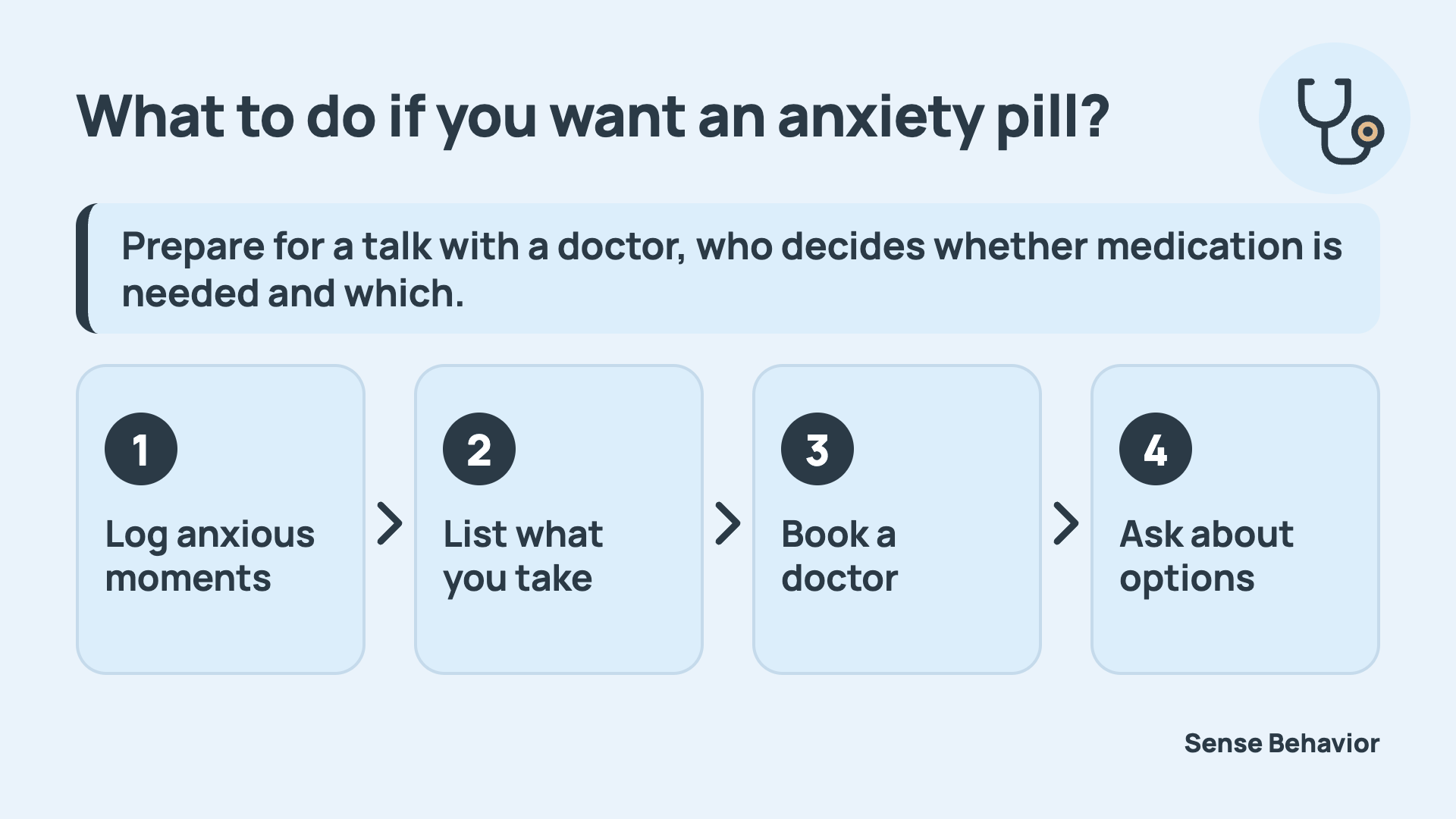
Prepare for a conversation with a doctor and get help that addresses the cause. You can start today:
- write down when anxiety rises, how long it lasts, and what comes before it;
- list everything you take, including medication, supplements, and substances, so the doctor can account for interactions;
- write down questions for the doctor: what benefit is expected, what side effects, what happens on stopping, and how long treatment is needed;
- ask what options without medication exist and look at what helps in practice.
The general picture of anxiety is described in the piece on anxiety in adults, and what questionnaires show in the piece on the anxiety test.
You can work out where to start in your own situation with no commitment, through the bot, which asks a few questions and suggests a next step, and how the center's work with adults is set up in general is on the For Adults page.
This material is for informational purposes only and does not replace a consultation with a specialist.