Adult ADHD Treatment: What a Psychiatrist Decides and What You Can Do Yourself

A typical story goes like this: a person was diagnosed with anxiety or depression, mood evened out over time, and the trouble with concentration and organization never went away. If you searched for adult ADHD treatment, you may be at exactly this point and want to understand what is done for ADHD at all, who decides, and what to expect from medication.
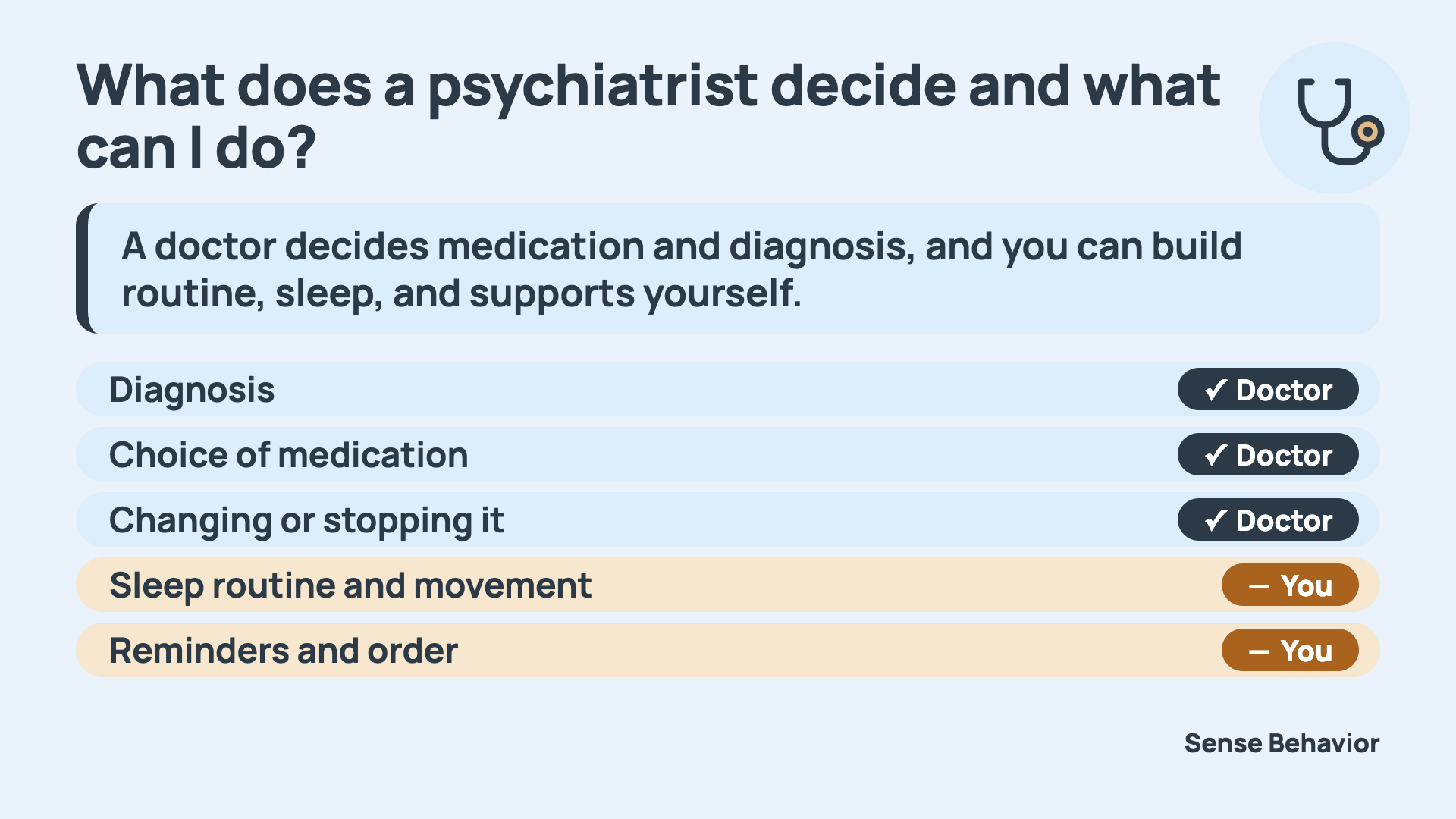
Below is information without regimens or doses, because the choice of treatment and medication is made only by a doctor. The article helps you get your bearings and prepare for a conversation with them.
How Is ADHD Treated in Adults
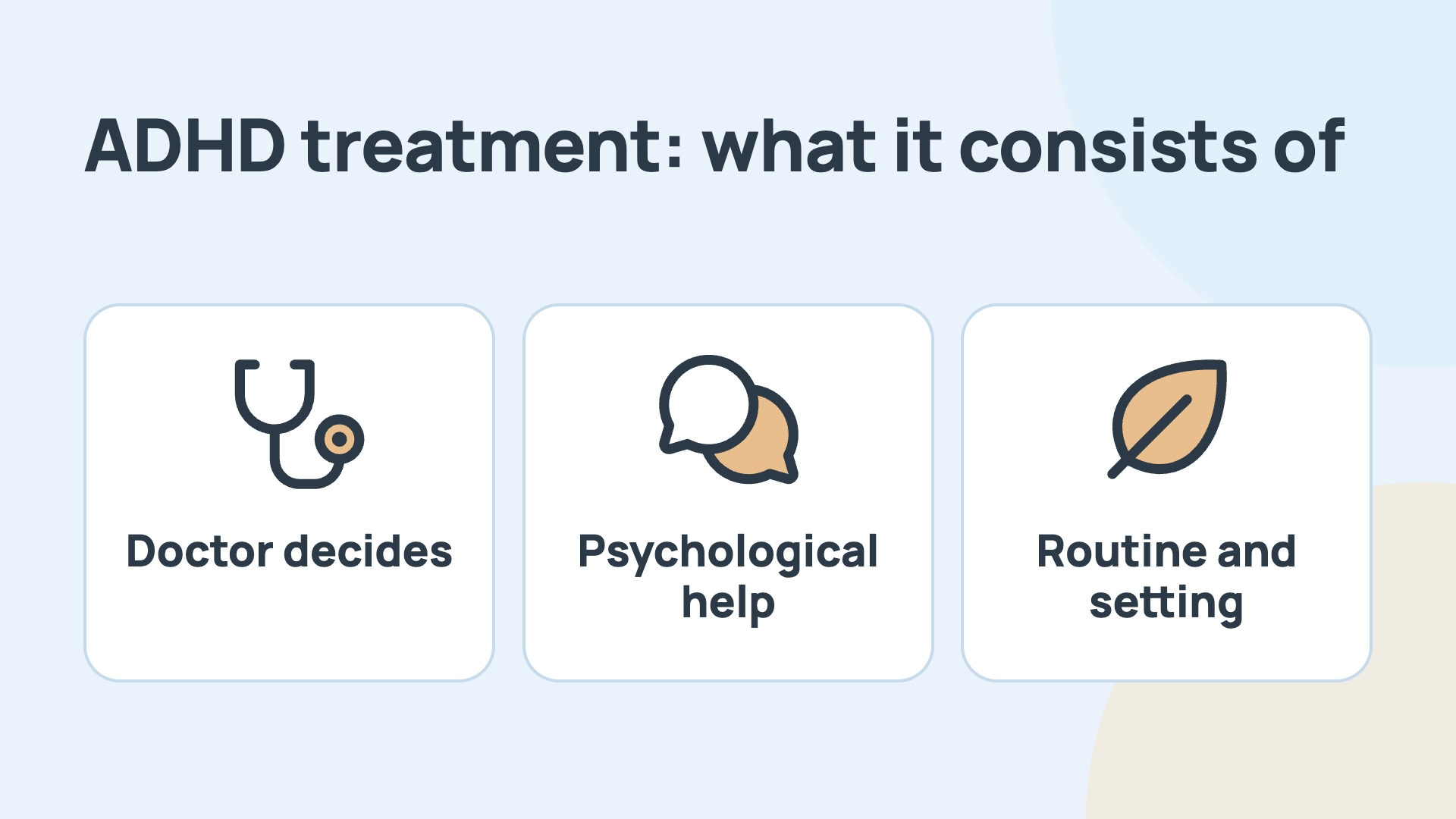
Treatment of adult ADHD is made up of changes to the environment, psychological help, and, where needed, medication, and it is chosen individually. According to the UK's NICE guideline, medication is offered to adults whose symptoms still get in the way noticeably in at least one area of life after changes to the surroundings have been made and reviewed, while psychological treatment is considered for those who have made an informed choice to go without medication, cannot take it, or got no benefit from it (NICE, 2018). Together with the doctor, an overall treatment plan is drawn up that takes into account your goals, the severity of symptoms, sleep, and coexisting conditions.
What ADHD Medications Are Prescribed to Adults and Who Decides
ADHD medication is prescribed and started only by a doctor trained in diagnosing and treating ADHD (NICE, 2018). Before starting, the same guideline calls for a full assessment: confirming the diagnosis, looking at mental health and living circumstances, including the risk of substance misuse, and at physical health, including the cardiovascular system, pulse, and blood pressure. Here is what is worth knowing in general terms:
- Groups of medication. These are stimulants, for example amphetamine-based drugs and methylphenidate, and non-stimulants, for example atomoxetine. The range of available drugs and the rules for prescribing them depend on the country.
- The order of choice. For adults NICE names lisdexamfetamine or methylphenidate as first line, and offers atomoxetine if these are not tolerated or did not help in separate six-week trials (NICE, 2018).
- Follow-up. The doctor monitors effectiveness and side effects, and in adults the guideline says weight is measured every six months and regular follow-up is arranged whether or not you take medication (NICE, 2018).
- Combinations. If you are being treated for anxiety or take other medication, the doctor needs to know, because they take it into account in the choice. For people with ADHD and an anxiety disorder or autism, NICE suggests the same medication options as for others (NICE, 2018).
How Effective Are ADHD Medications in Adults
They reduce symptoms but also cause side effects, and data on long-term results are limited. The network meta-analysis by Cortese and colleagues covered 133 double-blind trials, 51 of them in adults, and the efficacy analysis at 12 weeks included 8131 adults. By clinicians' ratings, amphetamine-based drugs, methylphenidate, bupropion, and atomoxetine were more effective than placebo and modafinil was not, and the share of people who dropped out because of side effects was higher than on placebo with amphetamines, atomoxetine, methylphenidate, and modafinil. The authors concluded that for short-term treatment of adults, taking efficacy and safety together, amphetamines are preferred, and stressed that long-term effects urgently need study (Cortese et al., 2018).
For a reader, the main takeaway is this: medication can help, but it is a decision with pros and cons that the doctor weighs together with you, and declining medication is as acceptable as agreeing.
If you are wondering whether treatment will be needed for life, does ADHD go away with age looks at what changes over the years.
What You Can Do Yourself for Adult ADHD
Build everyday supports that work alongside treatment or instead of it if you have made an informed choice to go without medication. NICE separately stresses the value of a balanced diet and regular exercise for people with ADHD (NICE, 2018). What else helps and what research shows about psychological help we cover in the piece on how to cope with adult ADHD without medication. Any decisions about starting, changing, or stopping medication are made by a doctor.
What to Do If Anxiety or Depression Is Treated but Concentration Does Not Improve
Tell the doctor about it and ask them to assess ADHD separately. Coexisting conditions in adult ADHD are closer to the rule: at least one more is present in 75% of clinical patients (Kooij et al., 2010), so ADHD often stays unnoticed behind anxiety or depression. How an assessment goes is described in the piece on adult ADHD diagnosis, and worries that seeing a psychiatrist has consequences we cover in the piece on psychiatric registration in adults. If you are only starting out, then look at what the symptoms of ADHD in adults look like.
You can work out where to start in your own situation with no commitment, through the bot, which asks a few questions and suggests a next step, and how the center's work with adults is set up in general is on the For Adults page.
Sources
- NICE (NG87, 2018, updated 2019). Attention deficit hyperactivity disorder: diagnosis and management.
- Cortese S. et al. (2018). Comparative efficacy and tolerability of medications for attention-deficit hyperactivity disorder in children, adolescents, and adults: a systematic review and network meta-analysis. The Lancet Psychiatry, 5(9), 727–738.
- Kooij S. J. J. et al. (2010). European consensus statement on diagnosis and treatment of adult ADHD: The European Network Adult ADHD. BMC Psychiatry, 10, 67.
This material is for informational purposes only and does not replace a consultation with a specialist.