Rejection sensitive dysphoria in ADHD: why criticism hurts so much and what helps

Rejection sensitive dysphoria in ADHD is the everyday name for a very sharp pain in response to criticism or the feeling of being rejected, even when the trigger was small. It is not a diagnosis and not an item on official symptom lists, but the strong emotional reaction itself is described in research on adults with ADHD as emotional dysregulation.
Does it sound familiar that a short “we need to talk” from a manager ruins the whole day, and a friend’s displeased look keeps you replaying the conversation until night? Many people live like this and assume something is wrong with them. Below is what is known, what is not, how to cope and who to see. This article does not diagnose anyone. It describes experience and research data.
What is rejection sensitive dysphoria in ADHD and is it part of the diagnosis
The name came from popular science writing and blogs. It is not a diagnosis in the DSM-5 or ICD-11, and research on rejection sensitive dysphoria itself is still scarce. It has long been known that people with ADHD often have difficulty regulating emotions, but there is no agreement on how to describe it.
What research says about emotions in adults with ADHD
A review by Shaw and colleagues (2014, American Journal of Psychiatry) states that emotion dysregulation is common in ADHD across the lifespan and contributes strongly to everyday impairment. The authors weigh three models: a separate dimension, a core feature or a separate condition. They also note that standard ADHD treatment often improves emotion regulation too. A 2023 systematic review (PLoS One) argues that in adults it can be seen as one of the core features of ADHD. None of this means that every sharp reaction to criticism comes from ADHD: the same happens with anxiety, depression and other conditions, so a specialist decides the cause.
What a sharp reaction to criticism can look like
- After a remark at work you replay the conversation for a long time.
- You read a neutral message as cold or offended.
- You avoid tasks where you could be judged.
- You agree with everything in advance so nobody gets upset.
- The reaction flares up fast and fades fast, but the aftertaste stays.
If you recognise yourself in several of these, it is a reason to look closer, not yet a conclusion. Many of these experiences are familiar to people without ADHD too.
How a sharp reaction to criticism differs from ordinary hurt
Criticism upsets almost everyone. Three markers suggest the reaction is worth discussing with a doctor. The first is strength: the pain is out of proportion to the trigger. The second is duration: the aftertaste lasts for days. The third is consequences: you start avoiding people, tasks or conversations. These are not diagnostic criteria, just a way to describe the situation to a specialist in your own words.
What to do when criticism hurts too much
- Give yourself a pause. Do not answer right away. Postpone the reply by an hour or until morning.
- Name the feeling. Tell yourself: “I am in pain right now, and this is a wave.”
- Check the facts. What exactly was said, word for word?
- Ask. “Are you angry with me or just busy?” is often more useful than guessing.
- Look after your body. Water, a walk and a slow exhale help the wave pass.
What to do today: write down the last three situations where your reaction felt bigger than the trigger, and add one line for what was said word for word. Three notes is enough, maybe five. They will help at an appointment with a specialist. For more self-help ideas, see ADHD in adults without medication.
Who to see if a sharp reaction to criticism gets in the way of life
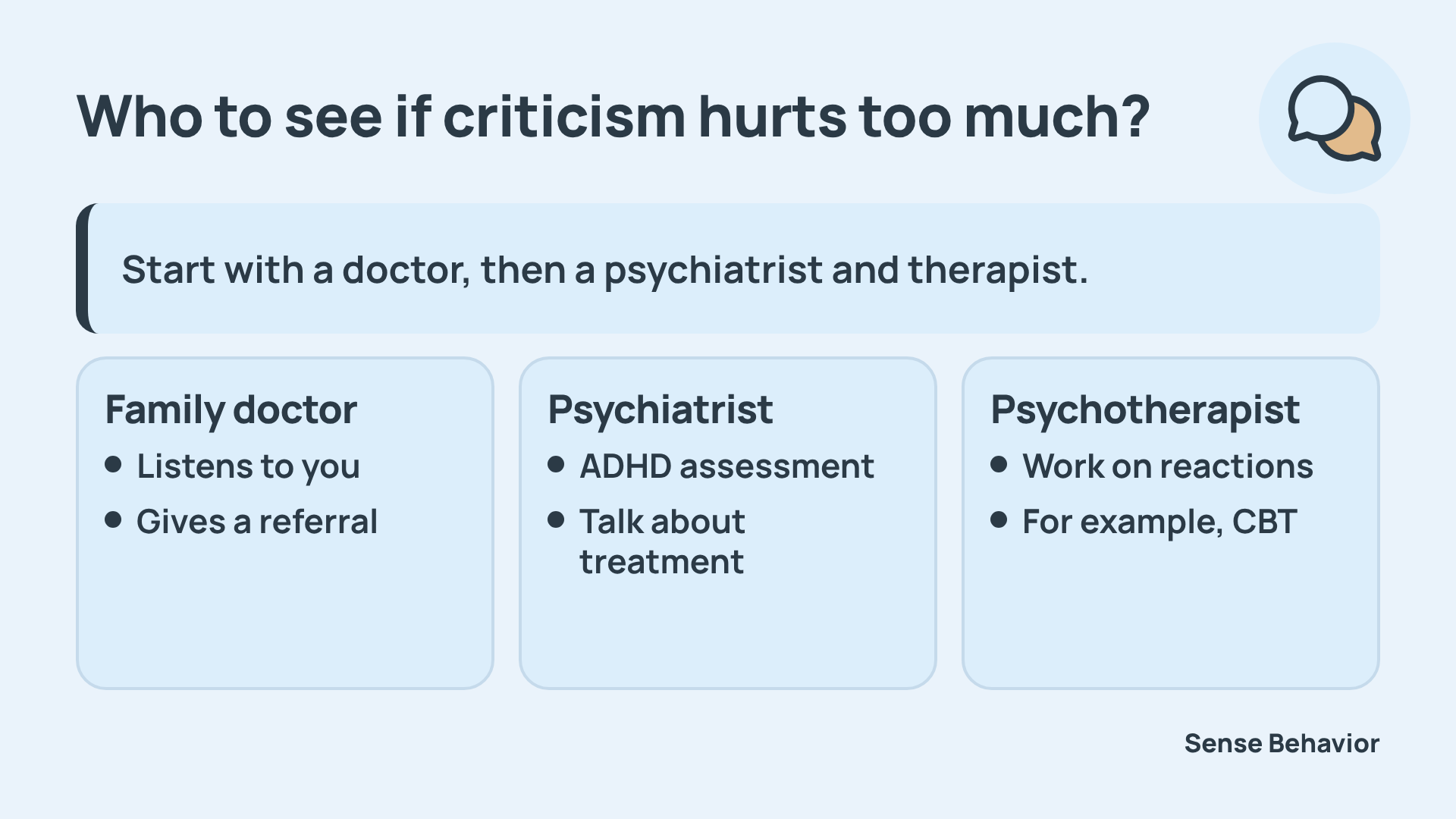
You can start with a family doctor, who will listen and refer you on. A psychiatrist assesses ADHD and discusses treatment. A psychotherapist, for example in a CBT format, helps work with habitual reactions to criticism. There is a separate article on ADHD symptoms in adults, and the link with anxiety is covered in ADHD and anxiety.
If the pain comes with thoughts of harming yourself, do not wait for an appointment: contact a doctor or a crisis line in your country.
Sources
This material is for informational purposes only and does not replace a consultation with a specialist.