Autistic meltdown and shutdown in adults: causes and what helps

Autistic meltdown and shutdown in adults are two reactions to overload. In a meltdown the tension breaks out: tears, shouting, sharp words. In a shutdown a person seems to switch off: speech fades and the wish is to stay silent and still. The cause is too much input and demand at once, which is why “pull yourself together” rarely helps. In a 2023 study by Lewis and Stevens, most of the 32 autistic adults described being overwhelmed by information, senses, and social or emotional stress.
If after a hard day you either snap at people close to you or cannot get a word out, this is familiar to many people with a sensitive nervous system. Seeing yourself in a text does not make it a diagnosis. Below we look at how the two differ, what triggers them and what helps before, during and after.
What are autistic meltdown and shutdown in adults and how do they differ
Both arrive when the load has gone past your resources. They look different from the outside.
- Meltdown. Built-up tension comes out: tears, shouting, sharp words, a wish to run.
- Shutdown. Energy seems to switch off: speech fades or shrinks, moving and deciding becomes hard.
- In common. Both follow overload, and controlling yourself in that moment is very hard.
Participants in the Lewis and Stevens study spoke of intense emotions, trouble thinking and a feeling of “not being themselves”. A scientific paper on metaphors describes shutdown as a “blue screen of death”, like a frozen computer. For one person it is a quiet pause, for another a heavy event, so there is no single picture.
What causes an autistic meltdown in an adult and how to notice it early
In the study, participants named three groups of causes, which usually stack up.
- Information. Many tasks, messages and urgent decisions at once.
- Senses. Noise, bright light, smells, crowds, uncomfortable clothes.
- People and emotions. Long conversations, other people’s expectations, hiding your own reactions.
Many people notice warning signs a few minutes before the peak. Adults most often describe these.
- Sounds that usually do not bother you become irritating.
- Words are hard to find, or you want to answer in a word or two.
- The body is tense and sitting still is hard.
- You want to leave, be alone, turn the light off.
Some participants tried to keep away from things that could trigger a meltdown and went somewhere alone ahead of time. That is a way to protect yourself from harm, and weakness has nothing to do with it. If your overload builds up from noise and crowds, read about sensory overload in adults.
What to do in a meltdown or shutdown: before, during and after
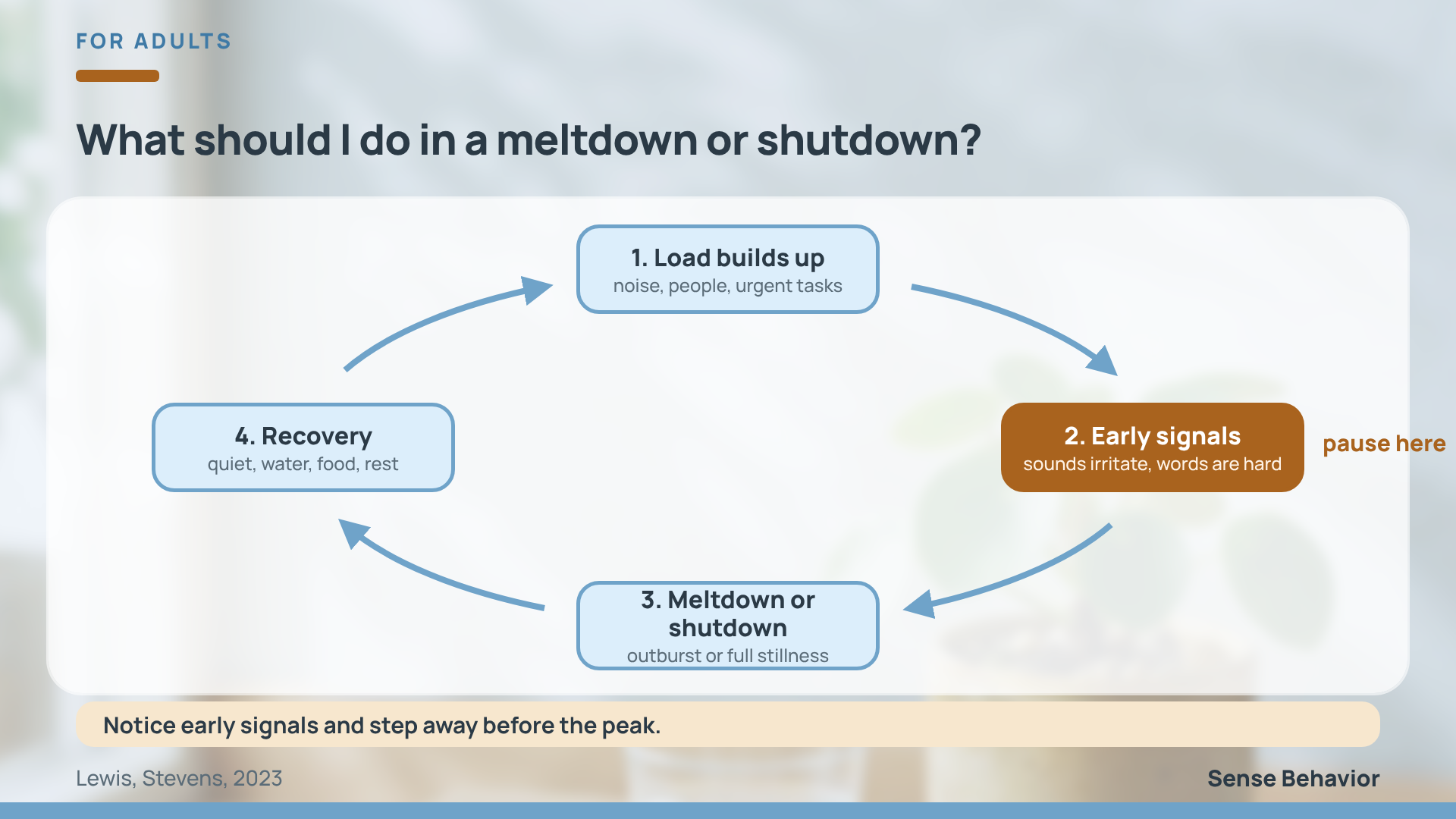
The short answer: notice early signals, step away before the peak and give yourself time to recover. You can anchor it like this.
- Before. Make a pause plan: a quiet place, headphones, water, a short message to close people, “I need time”.
- During. Leave the triggers, lower light and noise, and do not try to explain or argue.
- After. Rest without judging yourself, eat, drink water and postpone hard conversations.
It helps people close to you to know that in those minutes “just relax” and a stream of questions only add load. Sitting quietly nearby and offering water is enough. If strong episodes repeat often and recovery takes days, it may be linked to accumulated exhaustion, covered in the article on masking and burnout.
When to talk to a specialist about meltdowns and shutdowns
Reach out to a psychiatrist or clinical psychologist if any of this happens.
- Episodes happen several times a week.
- You hurt yourself or fear you might.
- Recovery takes days and work or relationships suffer.
A specialist can help you understand where the overload comes from and will not call you “weak”. Self-assessment does not replace a diagnosis. If you notice that repeated movements help you settle, see also stimming in adults.
What to do this evening to understand your episodes better
- Write down the last three situations when you snapped or went silent.
- Next to each, note what came before: noise, people, urgent tasks, lack of sleep.
- Choose one place and one object for a pause, for example headphones.
A record like this shows a pattern and gives you something to bring to an appointment if you decide to go.
Sources
This material is for informational purposes only and does not replace a consultation with a specialist.