How to choose an ABA center in Dubai: 12 questions before you pay

How to choose an ABA center in Dubai when there are dozens and every website looks equally professional? Looking at storefronts and reviews is hard, because everyone's marketing is strong, and the reliable way to compare centers, ours included, is to put the same twelve questions to each before paying. This is a practical list, not a research finding: there is no scientific study on this topic, and we will not pretend there is.
Why choosing in Dubai is harder than it looks
Where centers are few, the difficulty is finding anyone at all. In Dubai it is the opposite: search results are full of polished pages with similar promises, and what has to be compared is quality, not availability. Money also shapes the choice: price guides and how insurance coverage works are in ABA in Dubai: insurance and cost. A behavior analyst's credentials can be checked in the BACB registry, but a certificate speaks of training, not of how a center treats your family. That is what the questions below are for.
Questions about method and program
- 1. Do they build skills in the child or work on symptoms? A good program names specific skills (asking, waiting, dressing, playing alongside) and a plan for teaching them, rather than promising to "remove" behavior.
- 2. Do they take your child's individual features into account, or are skills set from standard testing (VB-MAPP/ABLLS-R)? Assessment with a standard tool is needed, but the program should rest on what matters to your family and what the child already manages.
- 4. Do they work on everyday requests and self-care (toileting, eating, unwanted behavior)? If the program has no room for your hardest everyday problem, ask how they would handle it.
Questions about family involvement and transparency
- 3. How and when are family members taught to carry these skills into everyday life? A skill that exists only in the therapy room does not change life. Ask how much time is set aside for parent training.
- 7. Are the program and test results handed to the parent? The assessment results and the current program belong to the family: you have every right to show them to another specialist.
- 8. How often does the supervisor see the child and talk to parents, and is that paid? Agree on the frequency and format of contact in advance so questions do not pile up for weeks.
- 9. Can you attend sessions or watch them on video? Open sessions are a simple check: if parents may neither watch nor ask why not, be wary.
Questions about money and the contract
- 5. Is a refund guarantee written into the contract if there is no result? Nobody can guarantee an outcome, but the refund procedure and termination terms should be in the contract.
- 6. How often is the child's case supervised, and is it paid separately or included in the price? Supervision by the lead clinician is what keeps program quality up, and its cost is better known in advance.
- 12. If the child is ill or away, is the slot in the schedule kept free of charge? A small thing that shows attitude to the family: a child's illness should not cost you your place.
In Dubai add two clarifications to this block: what is included in the session price, and whether the center requests pre-authorization from the insurance company itself.
Questions about safety and ethics
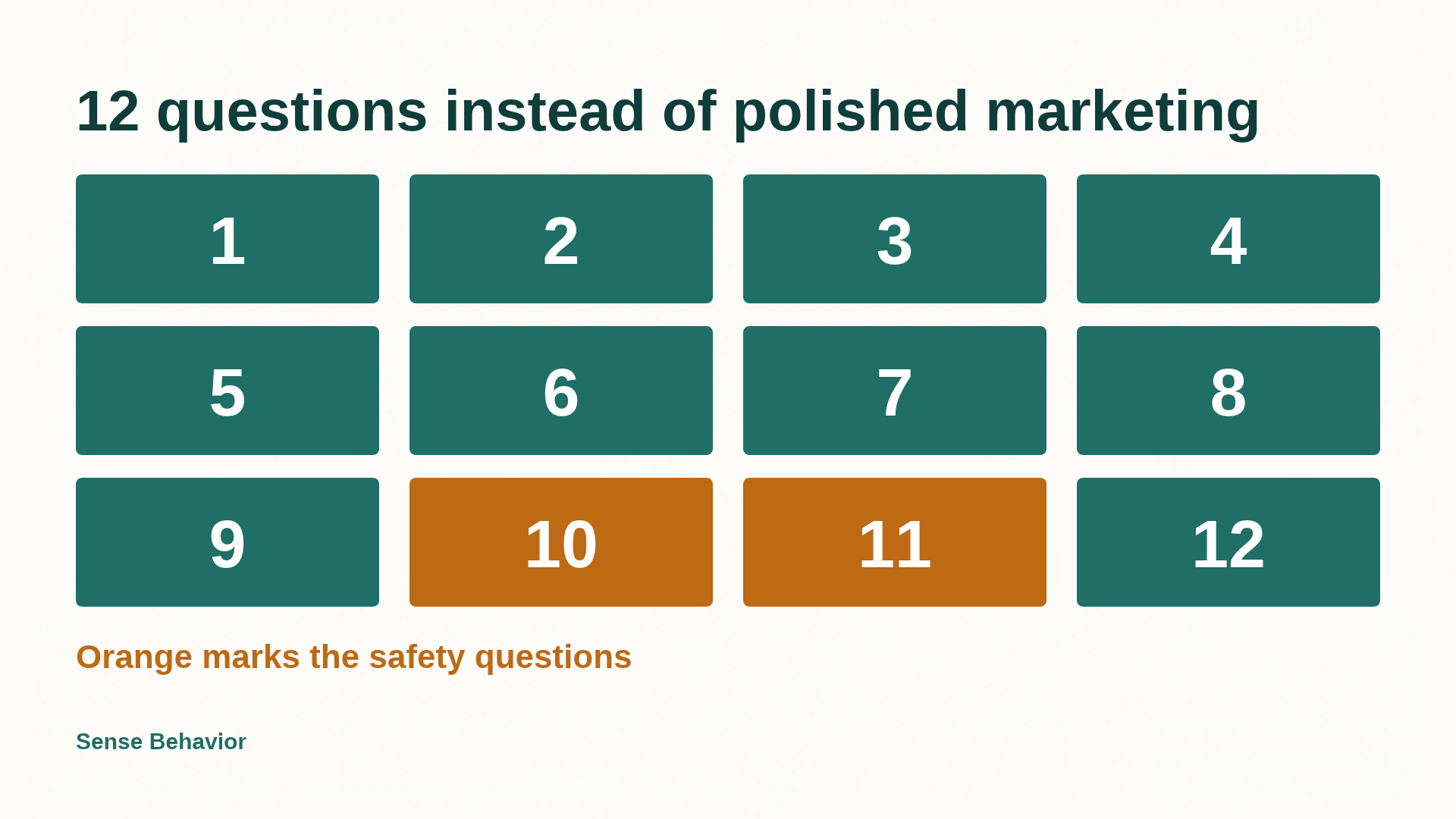
- 10. Are time-outs or physical restraint used? Ask in which cases and under what protocol. Physical restraint should be an exceptional safety measure, not a working technique.
- 11. Are any punishments used on the child? Modern ABA is built on supporting desired behavior rather than punishing, and the answer here should be unambiguous.
It is better to get answers to the last two questions in writing: a vague "we work gently" is no substitute for concrete rules. How to tell sound methods from doubtful promises is in myths about autism treatment. If you want to add remote sessions to in-person ones, start with working with an ABA specialist online.
How Sense Behavior helps families in Dubai
Make a short list of three centers and put the same questions to all of them, so the comparison is fair. These twelve questions apply to us just as much. We are ready to show the program and assessment results, explain the contract and answer in writing. You can start with a free thirty-minute consultation.