Daycare and school for a child with autism in Bulgaria: how the resource teacher system works
Bulgaria's inclusive education system is built around the concept of a "child with special educational needs," and for an autistic child this is the main route to getting support right inside a regular kindergarten or school, rather than in a separate specialized institution. The key figure in this system, the resource teacher, works with the child individually or in a small group inside the regular group or class.
What a resource teacher actually does
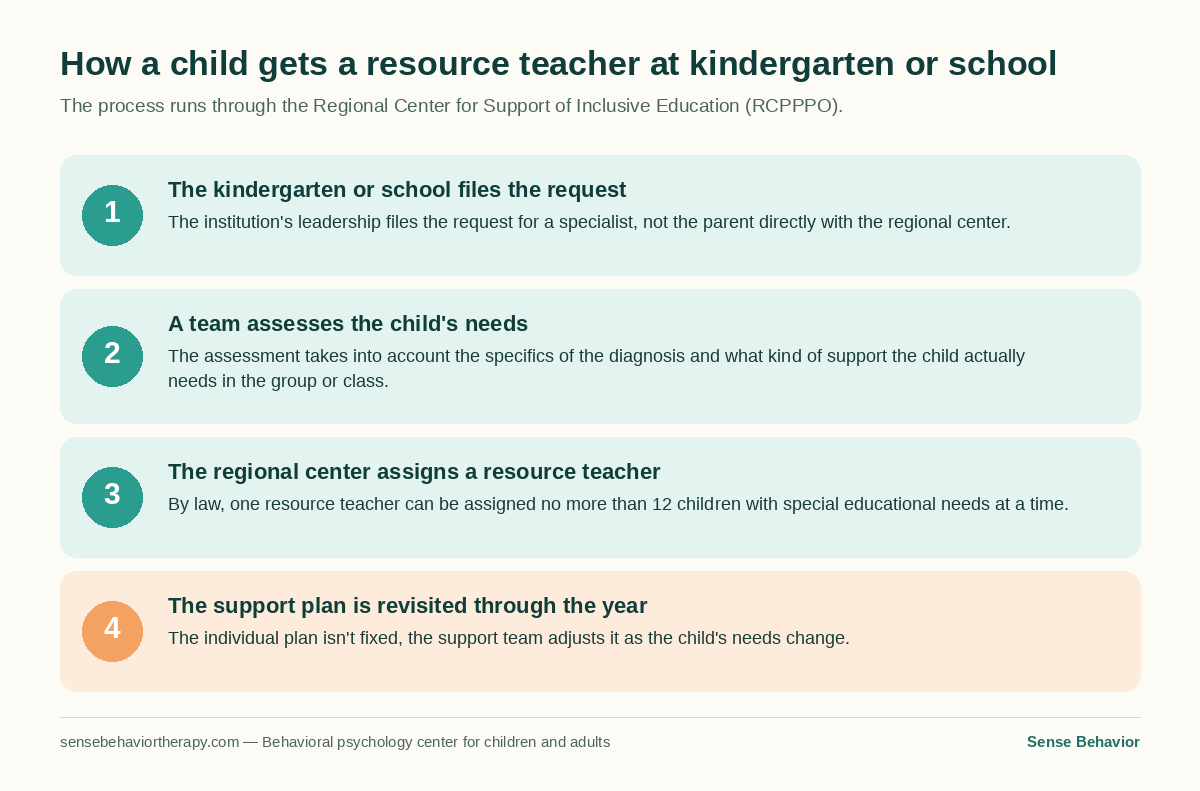
According to the Priobshti se! portal, a resource teacher is now a permanent part of the team in kindergartens and schools, working alongside other specialists such as psychologists, speech therapists, and pedagogical counselors. Their job isn't to replace the regular group for the child, but to help them stay as much a part of it as possible. According to official statistics from the National Network for Children, the country has around 2,200 resource teachers supporting over 25,000 children with special educational needs, and by law one resource teacher can be assigned no more than 12 children at a time.
How a child actually gets a resource teacher
The process doesn't run directly through the parent, but through the kindergarten or school itself. It's the institution's leadership that files the request with the regional support center, such as RCPPPO in Sofia (every major region in Bulgaria has its own regional center). After the request is filed, specialists assess the child's specific needs, and based on that assessment the regional center assigns a resource teacher.
One practical point for parents: if the kindergarten or school doesn't file the request on its own, it's worth asking about it directly and pushing for it, since a child's right to this support doesn't depend on how proactive the institution is, but in practice it often does.
The individual plan isn't fixed
A child's support plan gets revisited throughout the school year rather than written once and left alone. The support team adjusts it as the child's needs change, so it's worth checking in regularly on whether the plan is still current, rather than assuming that support agreed on once will simply stay the same on its own.
How this factors into Sense Behavior's programs
A resource teacher at daycare or school and a behavioral program at home work best together, not separately, especially when both specialists are working toward the same skills and the same approach to the child's behavior. If you're preparing your child for the move to daycare or school, our article on inclusive education for children with autism may help, along with our breakdowns on preparing for daycare and preparing for school.
You can start with a free thirty-minute consultation, where we'll talk through how to build a program that supports what's already happening at daycare or school, rather than duplicating or working against it.