Child Won't Leave Mom's Side: Causes and What to Do

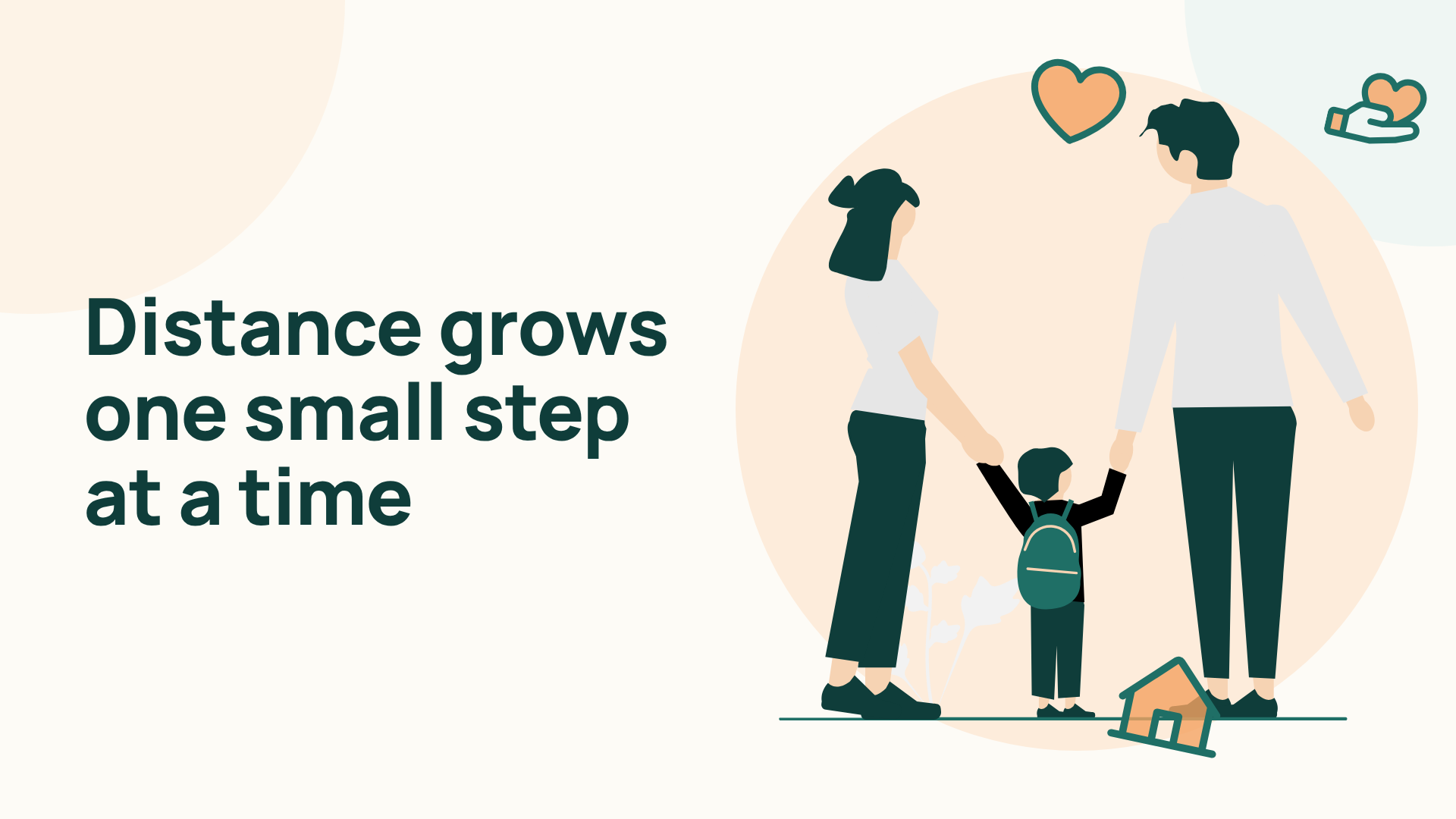
A child who won't leave mom's side is usually a child who feels calm next to her and anxious without her. For many toddlers this is an age stage that softens by three or four. What helps is letting the distance grow in small steps, so the child has time to learn that mom comes back.
If you can't shower, cook or answer a call, and your child follows you and cries at the closed door, being tired makes sense. You did not spoil them, and you did not miss anything. A diagnosis can't be made from a description in an article, but you can sort out the likely causes and find first steps today.
Why a child won't leave mom's side: common causes
The behavior is one, but the causes are several. To find yours, think about what changed in the last few weeks. This way of looking is explained in detail in the article on the function of child behavior.
- Age-related attachment. In many children, anxiety about separation grows in the second year of life and fades gradually.
- Changes. A move, a new language around them, daycare, illness, a new baby, someone close going away.
- Tiredness and overload. After a loud day or toward evening, mom is the only anchor left.
- Attention. If there is a lot of interaction near mom and quiet without her, the child chooses interaction.
- Unpredictability. When it is unclear where mom is going and whether she will return, following her just in case feels safer.
When closeness to mom is normal and when to get help
Watching and waiting is usually enough if your child calms down within a few minutes after you leave and then plays, eats and sleeps as usual. It is worth asking for help in these cases:
- The anxiety lasts for months and does not fade.
- The child is afraid to be even in the next room at home, although they used to manage.
- Sleep, eating or daycare suffer, or there are nightmares and complaints of a stomachache or headache at separation.
- Along with this, speech, play or eye contact worry you, especially if skills have been lost. In that case, start with a pediatrician or neurologist.
What a study shows about separation anxiety in preschoolers
In a 2023 study, Chan and colleagues compared 132 preschoolers: 77 had autism spectrum disorder (ASD) and 55 were developing typically (Research on Child and Adolescent Psychopathology). In the ASD group, more than 70% of children met criteria for an anxiety disorder, most often specific fears and separation anxiety. Parents reported more anxiety in the ASD group, while teachers did not. The work has limits: the sample is small, and parent questionnaires agreed poorly with the specialist interview. The practical takeaway is simple: if your child clings to mom and a lot is changing around them, it makes sense to talk to a specialist about anxiety instead of putting it down to temperament.
How to help a child who follows mom everywhere: a step-by-step plan
Distance grows in small steps, and mom comes back exactly when she said she would. This is how a child checks in practice that separation is safe. You can take a first step today, more or less.
- Start with seconds. Say "I'm in the bathroom, back in a moment," step out for ten seconds, return and say: "You waited."
- Say where you are going and when you will be back. A sand timer or a picture timer lets your child see the time.
- Say goodbye the same way each time. Hug, say one phrase, wave. Slipping away is best avoided: the child stops trusting and holds on harder.
- Keep an activity for the time apart. Clay, blocks or a book that is only available while mom is out of the room.
- Notice independent minutes. "You built a tower while I washed the dishes." Attention goes to independence. You will find ideas in the article on how to teach a child to play independently.
- Add time gradually. If things stay calm for a few days, add a minute or two. If tears start, go back one step.
This is how ABA (applied behavior analysis) teaches children to tolerate distance: the steps are small, a good attempt gets support, and progress is recorded. The method does not promise quick results, and every child has their own pace.
What to do if you are exhausted by a child who is always next to you
Being worn out by constant contact does not mean a lack of love, it needs an outlet. Agree with someone close to take over for twenty minutes a day while you are alone. If there is no one to help, build a pause into the day: put on calm music and sit in the next room with the door open. How to recognize burnout and what to do about it is described in the article on parent burnout.
When to see a specialist if your child won't leave mom's side
A specialist is needed if the anxiety lasts several weeks without improvement and interferes with sleep, eating, daycare or lessons, while speech, play or eye contact also worry you. You can start with a pediatrician to rule out pain and sleep problems.
Sense Behavior specialists review such cases remotely: they watch video, help you see what keeps the clinging going, and build small steps with you for your family. An official diagnosis is not required for a consultation, and you can write to us using the link at the bottom of the page.