Autism in Adults: Books Worth Reading

If you are looking for an "autism in adults book," you probably want to read something that helps you understand yourself or someone close without medical language. There are many books on autism, but their quality and approach differ, so below is a selection with notes on how these books differ and how to read them.
The selection is based on publishers' and bookshops' catalogs, and we will not retell or copy the books. Books help you get your bearings but do not replace a specialist's consultation, and only a specialist can make a diagnosis.
How to Choose a Book About Autism in Adults
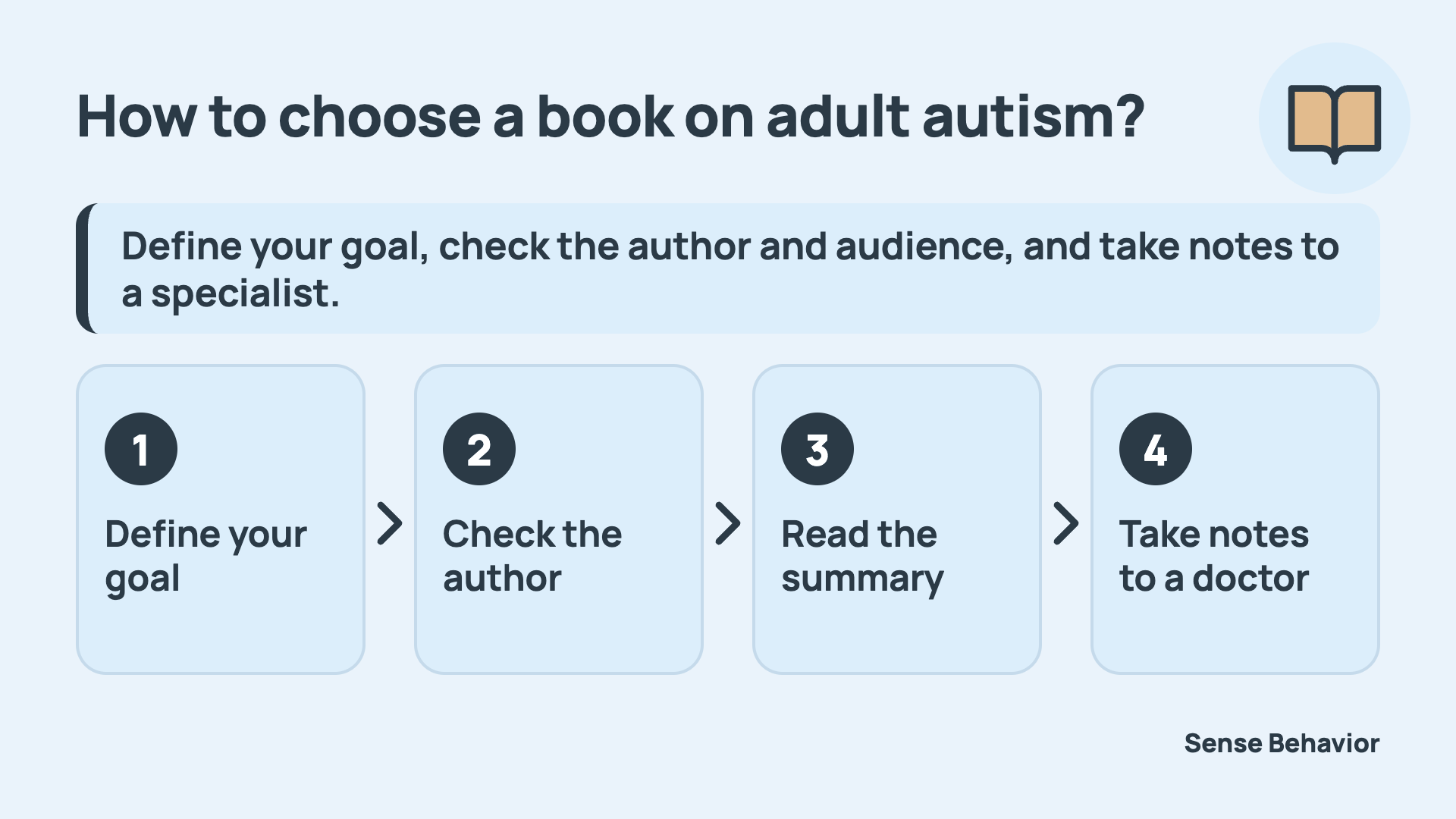
Start with the question of what you need right now: to understand yourself, to understand someone close, or to work out how to live more easily. These pointers help next:
- Who the author is. A specialist, a researcher and a person writing about their own experience give different views, and it is worth taking that into account.
- Who the book is for. Some are addressed to people with autism, others to their relatives or to specialists.
- What it promises. A book that promises to "cure" autism raises doubts.
- What you want to get. A personal story shows how it can be for one person, and a reference book gives a general picture.
Which Books About Autism in Adults Are in the Catalogs
Here are a few editions that turn up in catalogs, with what is known about them from the publishers' descriptions and titles:
- Zoya Sokolova, «Аутизм у взрослых. Как он проявляется, зачем его диагностировать и что предпринять, чтобы стало жить легче» (literally "Autism in Adults. How It Shows Up, Why to Get Diagnosed, and What to Do to Make Life Easier"; Eksmo). A practical guide by a psychologist on how autism shows up in adults, why diagnosis is needed, and what can make life easier. According to the publisher, it is written in accessible language for autistic people, their relatives, and specialists, with a short guide for specialists.
- Jennifer O'Toole, «Аутизм на шпильках. Удивительная история женщины с синдромом Аспергера» (literally "Autism on Stilettos. The Amazing Story of a Woman With Asperger Syndrome"; Portal). A personal story, that is, an account of one person's experience.
- Sarah Hendrickx, «Расстройство аутистического спектра у женщин и девочек. От раннего детства до пожилого возраста» (literally "Autism Spectrum Disorder in Women and Girls. From Early Childhood to Old Age"; Williams). A book on how autism shows up in women and girls at different stages of life.
- Roy Grinker, «Нестранные умы. Переосмысление мира аутизма» (literally "Non-strange Minds. Rethinking the World of Autism"; Portal). A book on how people and society look at autism.
- Casey Vormer, «Мир глазами человека с аутизмом. Принципы общения с людьми, имеющими РАС» (literally "The World Through the Eyes of a Person With Autism. Principles of Communicating With People With ASD"; Dialektika). A book on principles of communicating with people who have autism.
Which Books About Autism Exist in English
One English-language title listed in catalogs is Steve Silberman's "NeuroTribes. The Legacy of Autism and How to Think Smarter About People Who Think Differently" (Allen & Unwin), on the history of ideas about autism and the idea of neurodiversity. If you read English, it is one option.
How to Read Books About Autism in Adults
As material for reflection and questions for a specialist, and not as a set of criteria for self-diagnosis. You can start today:
- pick one book for your task and not the whole selection at once;
- while reading, mark places where you recognize yourself and write down specific situations from life;
- remember that a personal story shows one path and yours may differ;
- take your notes to an appointment with a specialist.
If you need the general picture, begin with the piece on what autism in adults is, in simple words, and then read the breakdown of signs of autism in adults and the piece on autism in adult women.
You can work out where to start in your own situation with no commitment, through the bot, which asks a few questions and suggests a next step, and how the center's work with adults is set up in general is on the For Adults page.
Sources
This material is for informational purposes only and does not replace a consultation with a specialist.