From awareness to acceptance: how the conversation about autism is changing and what it means for a parent
From awareness to acceptance is how the conversation about autism itself has shifted in recent years, and it isn't just a change in fashionable wording. In 2021, the Autism Society of America officially renamed April from "Autism Awareness Month" to "Autism Acceptance Month," following decades of persistent advocacy from autistic adults themselves. The difference can look formal at first glance, but underneath it is a shift in framing itself: awareness asks people to simply notice that autism exists, while acceptance asks society to recognize autistic people as they are, not as a project to be fixed.
What the research shows
In 2025, a study was published in which 784 adults in North America, including 611 autistic adults, rated the language they use when talking about autism (Robertson, Stockwell, Lampi & Jaswal, 2025). The result was striking: 59% of autistic adults used identity-first language exclusively, calling themselves an "autistic person," and only 3% used clinical, diagnosis-first language such as "person with autism." Among non-autistic participants the picture was more mixed: 37% chose identity-first language, while 22% stuck exclusively to diagnosis-first language.
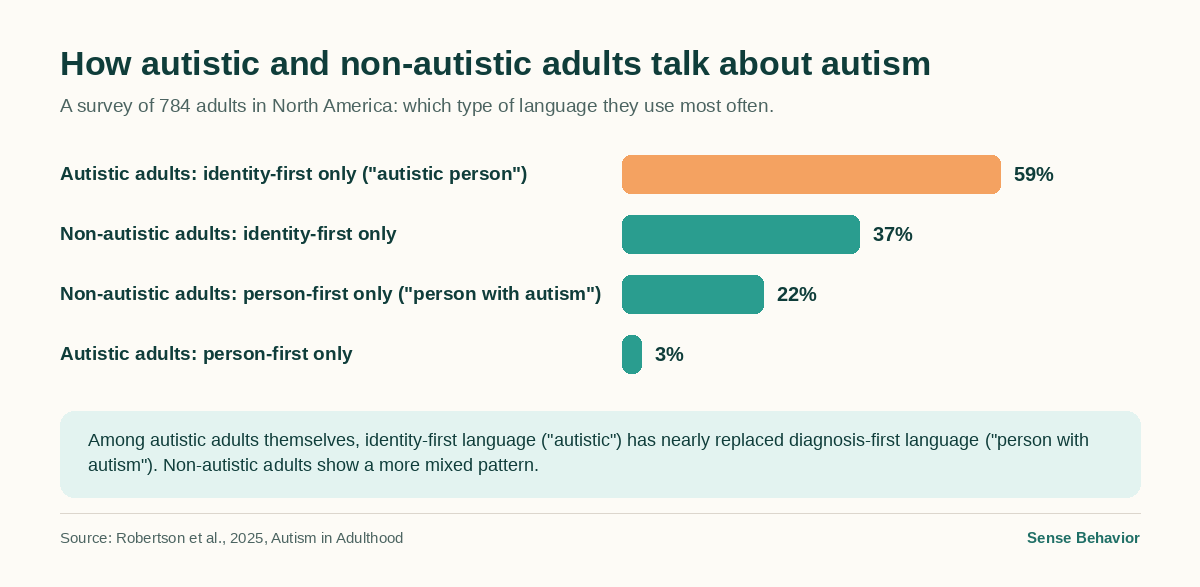
This gap matters on its own. The people who coined diagnostic language for medical charts and the people who live with that diagnosis every day are increasingly describing it differently, and that isn't a coincidence, it's a signal about whose voice deserves the most weight when it comes to choosing words.
What this means for a parent in practice
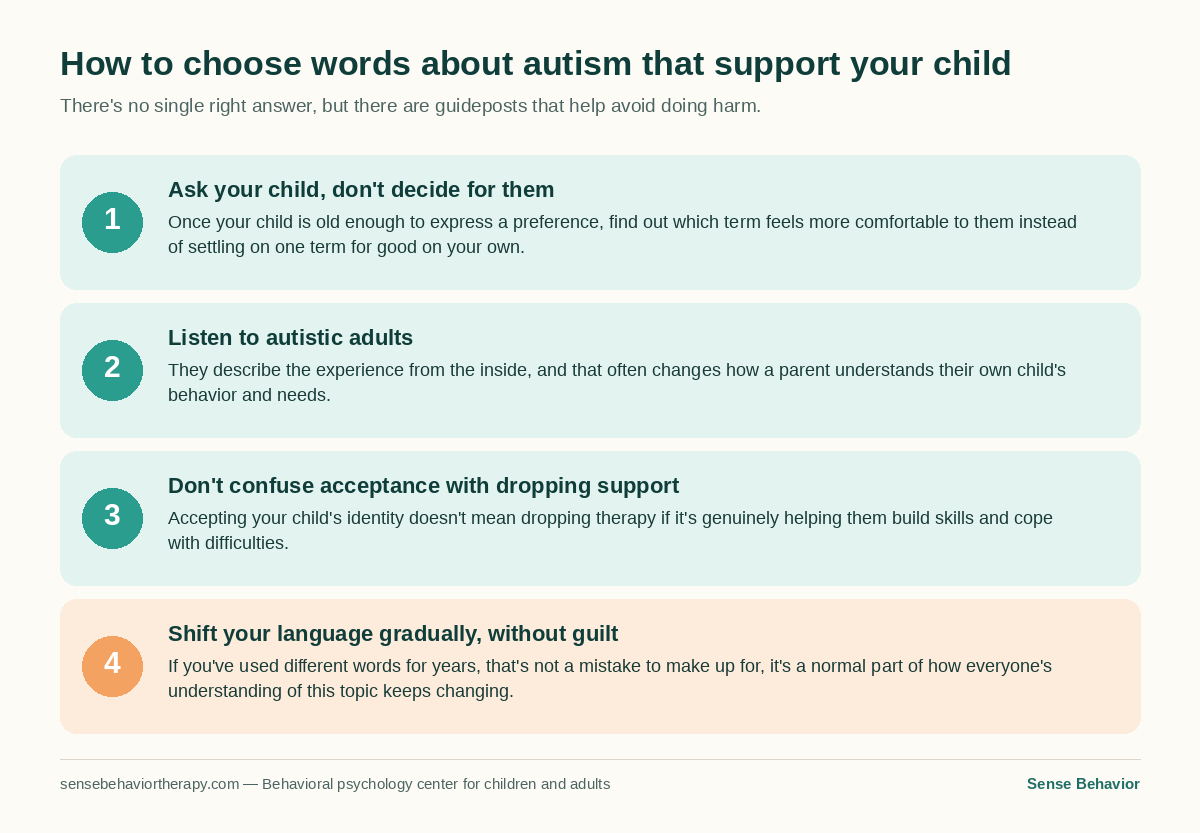
No single term is the one correct answer, and debate about language continues within the autistic community itself. But a parent has a few practical guideposts that lower the risk of accidentally causing harm while a child is still too young to have formed their own opinion about how they're talked about.
- Ask your child, don't decide for them. Once your child is old enough to express a preference, find out which term feels more comfortable to them instead of settling on one term for good on your own.
- Listen to autistic adults. They describe the experience from the inside, and that often changes how a parent understands their own child's behavior and needs.
- Don't confuse acceptance with dropping support. Accepting your child's identity doesn't mean dropping therapy if it's genuinely helping them build skills and cope with difficulties.
- Shift your language gradually, without guilt. If you've used different words for years, that's not a mistake to make up for, it's a normal part of how everyone's understanding of this topic keeps changing.
What doesn't change
The shift toward acceptance is sometimes misunderstood as a call to drop therapy entirely, or as a claim that a child doesn't need to change anything. In practice, that's not the case. Accepting your child's identity and working on specific skills, whether that's speech, independence, or reducing unsafe behavior, aren't in conflict. A good support program is built around what your particular child actually needs, not around an attempt to make them resemble someone else.
How this factors into Sense Behavior's programs
Skill-building in our programs is designed so the child stays themselves throughout: the goal isn't to erase traits, it's to expand a child's ability to navigate the world around them. If you're just starting to figure out how to talk about the diagnosis within your own family, you can start with a broader look at that question: how to accept your child's diagnosis.
You can start with a free thirty-minute consultation, where we'll talk through not just a program for your child, but how to shape the conversation about autism within your family.