Burnout in mothers of children with autism: what research shows and what to do about it
Burnout in mothers of children with autism has become a topic that's discussed in 2026 more and more as its own distinct problem, not just a variant of ordinary parental tiredness. And there's actual data behind that, not just a feeling. If you've already read a general article on parent burnout and recognized some of the symptoms, but you sense the issue isn't only lack of sleep and free time, but also a standing, invisible position as coordinator of your child's entire life, this article is about that second part of the problem.
What the research shows
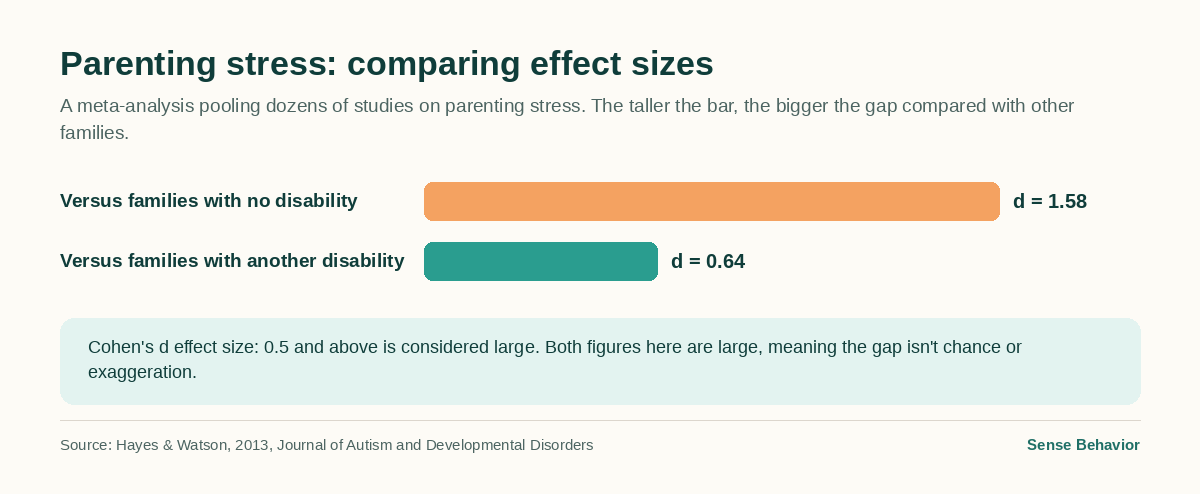
In 2013, a meta-analysis pooling results from dozens of studies on parenting stress was published (Hayes & Watson, 2013). Parents of children with autism showed significantly higher stress than parents of children without a disability, and the gap wasn't just noticeable, it was very large by statistical standards. The authors also separately compared parents of children with autism to parents of children with other disabilities, such as Down syndrome or cerebral palsy, and even in that comparison the gap stayed large. That means it isn't just the general fact of caring for a child with additional needs, there's something specific to the experience of autism that loads a parent more heavily.
The invisible work that doesn't show up in the statistics
One likely source of that extra load isn't always visible from the outside and is almost never counted when someone estimates how many hours a day go into a child. It's the coordinator role: holding the schedule of several specialists in your head at once, tracking payments and paperwork for each of them, being the person a teacher or aide calls with any question, explaining to a new babysitter or grandparent what's okay and what isn't, researching and checking new information whenever something stops working. This work is rarely called work out loud, because from the outside it just looks like «staying on top of things,» but it's usually exactly what keeps you from ever really exhaling, even during the hours the child isn't physically nearby.
What actually lowers this load
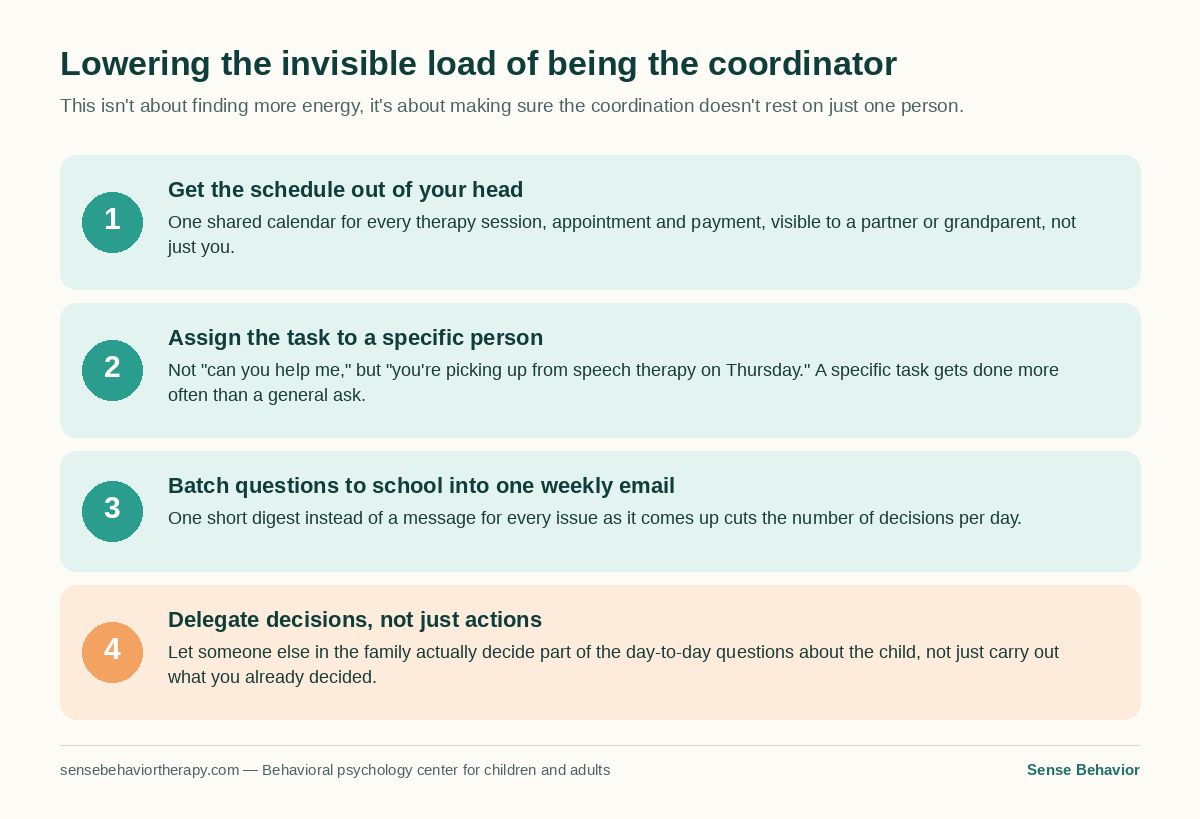
This isn't about finding more energy, it's about making sure the coordination doesn't rest on just one person.
- Get the schedule out of your head. One shared calendar for every therapy session, appointment and payment, visible to a partner or grandparent, not just stored in your own memory.
- Assign the task to a specific person instead of asking for help in general. «You're picking up from speech therapy on Thursday» gets done far more often than a general «can you help me with the schedule.»
- Batch questions to school into one weekly email. One short weekly digest instead of a message for every separate issue cuts down the number of small decisions you have to make over the course of a day.
- Delegate decisions, not just actions. Let someone else in the family actually decide part of the day-to-day questions about the child, not just carry out what you already decided, otherwise you stay the only coordinator regardless.
How this factors into Sense Behavior's programs
Part of the coordinator load isn't lifted by one person doing everything faster, it's lifted by a specialist taking on part of the decisions about a child's program, rather than leaving all of it to the parent alone. If what you recognize is being out of energy altogether, not just out of coordination capacity, it's worth starting with a broader look at that state: parent burnout.
You can start with a free thirty-minute consultation, where we'll talk through not just a program for your child, but how coordination load is currently split in your family.